
Thyroid Cancer Explained: Causes, Symptoms, and Treatment Options
Introduction
Sometimes the early signs of Thyroid Cancer can feel so subtle that they are easy to overlook. A small swelling in the neck, a voice change that lingers, or a sensation that something feels slightly different may not immediately seem important. Most people do not instantly think about the thyroid and that is understandable because the thyroid gland works quietly in the background, helping regulate many body functions without drawing much attention to itself.
One common misunderstanding is expecting thyroid cancer to appear suddenly with dramatic warning signs. In many cases, however, changes develop gradually and may remain mild for a long time. Understanding this is not about creating fear. It is about recognizing patterns that may deserve attention and understanding how the condition is evaluated, monitored, and managed over time.
Understanding Thyroid Cancer
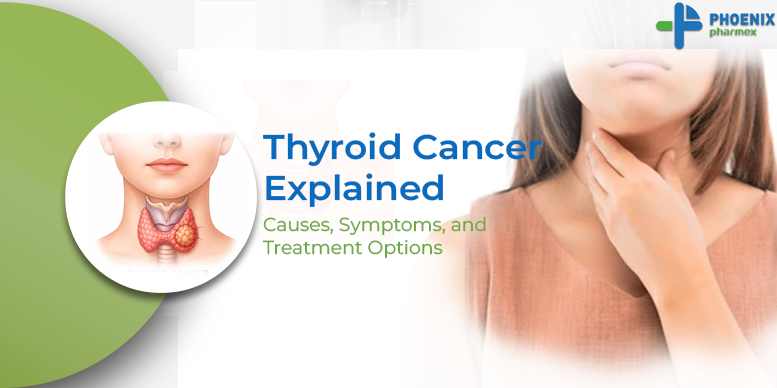
Thyroid Cancer develops in the thyroid, a small butterfly-shaped gland located at the front of the neck. The thyroid plays an important role in regulating:
Energy use
Metabolism
Body temperature
Hormonal balance
Thyroid cancer occurs when certain thyroid cells begin growing in an unregulated way. There are several types of thyroid cancer, and many forms develop gradually over time. In some cases, the condition may remain stable for long periods before being detected.
Understanding this gradual progression is important because evaluation, monitoring, and treatment are often approached carefully and step by step rather than with immediate urgency.
Why Thyroid Cancer Develops?
Inside the thyroid gland, cells normally renew and repair themselves in a controlled way. In Thyroid Cancer, changes can occur within a cell’s internal instructions, causing certain cells to grow differently over time. As this process continues, normal regulation may become less controlled and a thyroid nodule or abnormal growth may gradually form.
In many cases, the exact cause of thyroid cancer is not fully known. However, some factors may increase risk, including:
Family history
Radiation exposure in certain situations
Certain inherited genetic conditions
These factors may increase possibility, but they do not guarantee that thyroid cancer will develop.
Early Signs of Thyroid Cancer
The early signs of Thyroid Cancer are often subtle and may not cause pain or severe discomfort. In many cases, changes are discovered during routine medical examinations rather than because of strong symptoms.
Common early signs may include:
A lump or swelling in the neck
Persistent hoarseness or voice changes
Difficulty swallowing
Mild throat discomfort
Enlarged lymph nodes near the neck
These symptoms are not specific only to thyroid cancer, and many thyroid nodules are non-cancerous. This is why medical evaluation focuses on understanding the pattern, structure, and behavior of the change rather than assuming the cause immediately.
Thyroid Cancer Symptoms
As Thyroid Cancer progresses, symptoms may become more noticeable in some individuals. Common symptoms can include:
Visible swelling or a lump in the neck
Persistent voice changes or hoarseness
Difficulty swallowing or breathing
Neck discomfort or pressure
A persistent cough not related to infection
Some people experience very few symptoms even after diagnosis, while others notice gradual changes over time. This variation is common and is one reason why proper medical evaluation and monitoring are important.
Thyroid Cancer Diagnosis
The diagnosis of Thyroid Cancer is usually a gradual and structured process designed to understand the condition clearly.
Healthcare professionals may use:
1. Physical Examination
Checking the thyroid and surrounding neck area.
2. Imaging Tests
Ultrasound is commonly used to evaluate thyroid nodules.
3. Blood Tests
To assess thyroid hormone function.
4. Fine Needle Aspiration (Biopsy)
A small sample of cells may be collected for closer examination.
Each step provides more information and helps guide further decisions. The goal of diagnosis is clarity and accurate understanding not urgency or assumptions.
Thyroid Cancer Treatment Options
Thyroid cancer treatment depends on:
The type of thyroid cancer
The size and location
Whether nearby areas are involved
Overall health and age
Common thyroid cancer treatment options include:
Surgery
Removal of part or all of the thyroid gland.
Radioactive Iodine Therapy
Used in some thyroid cancers to target remaining thyroid cells.
Hormone Therapy
Supports hormone balance after thyroid treatment.
Radiation Therapy or Systemic Treatments
Used in selected situations depending on the cancer type and progression.
Treatment plans are personalized, and not everyone requires the same approach. The main focus is usually on controlling abnormal cell growth, maintaining hormonal balance, and supporting long-term health and quality of life.
Why Thyroid Cancer Experiences Differ?
Not all cases of Thyroid Cancer behave in the same way. Differences can depend on the specific type of thyroid cancer, how early it is identified, individual health factors, and how the body responds to treatment over time.
Some forms may progress slowly and remain localized for long periods, while others may require closer monitoring and more active treatment. This variation is expected and allows healthcare professionals to personalize treatment and follow-up care based on each individual’s condition and needs.
What to Expect During Treatment and Monitoring?
If you are being evaluated or treated for Thyroid Cancer, the process may feel unfamiliar at first. You may go through follow-up appointments, imaging scans, blood tests, and gradual discussions about treatment planning and monitoring.
Some stages of the process may feel emotionally tiring, while others may begin to feel routine over time. As care becomes more structured, uncertainty often decreases. You are not expected to understand every medical detail immediately—the process usually becomes clearer step by step with ongoing guidance and support.
Living Beyond the Diagnosis
A diagnosis of Thyroid Cancer may change awareness, but it does not stop everyday life. Many people continue working, maintaining routines, and managing family and social responsibilities while undergoing treatment or monitoring.
Over time, treatment schedules often become more familiar, follow-up care feels more predictable, and confidence gradually returns. This is why understanding the condition matters—because understanding helps transform uncertainty into something more structured, manageable, and easier to navigate step by step.
Importance of Medical Guidance
Because symptoms related to Thyroid Cancer can also occur in many non-cancerous thyroid conditions, professional medical evaluation is important. Healthcare professionals help confirm the diagnosis accurately, determine the type and extent of thyroid changes, and plan the most appropriate treatment and monitoring approach.
This process is not about rushing to conclusions. It is about steady, informed care, careful evaluation, and ongoing support over time.
Conclusion
Thyroid Cancer often develops gradually, and its early symptoms may feel subtle or easy to overlook at first. But when you understand the possible causes, recognize the symptoms and early signs, and learn how diagnosis and treatment work, the condition often becomes less overwhelming and easier to approach calmly.
You do not need to predict every future outcome. The most important step is understanding the next stage of care and with proper medical guidance and support, that step becomes more manageable and structured over time.
FAQs
1. What are the early signs of thyroid cancer?
Early signs of Thyroid Cancer may include a lump or swelling in the neck, persistent hoarseness, difficulty swallowing, or changes in voice. In many cases, symptoms develop gradually and may not cause pain initially.
2. What causes thyroid cancer?
The exact cause is not always clear. However, factors such as family history, radiation exposure, certain genetic conditions, and thyroid disorders may increase the risk in some individuals.
3. How is thyroid cancer diagnosis confirmed?
Diagnosis may involve a physical examination, ultrasound imaging, blood tests, and a biopsy if needed. Doctors use these tests together to understand the condition more clearly.
4. What are common thyroid cancer treatment options?
Treatment may include surgery, radioactive iodine therapy, hormone therapy, targeted therapy, or supportive care depending on the type and stage of the condition.
5. Are all thyroid nodules cancerous?
No. Many thyroid nodules are non-cancerous and may only require regular monitoring. Evaluation helps determine whether further testing or treatment is needed.
Reference
Medical Disclaimer
The information provided on Phoenix Pharmex is for educational purposes only and should not be considered a substitute for professional medical advice, diagnosis, or treatment. Always consult a qualified healthcare provider or doctor for any medical concerns, medication use, or health-related decisions. Do not ignore or delay seeking medical advice based on the content available on this website.

 Login with Facebook
 Login with Google
